


Chicago
The morning air over the Windy City carries a sharp, electric stillness. Today, the grid of Chicago's streets is not just a racecourse; it is a meticulously calibrated laboratory built to chase human impossibility.
The ghost of Kelvin Kiptum’s breathtaking 2:00:35 looms large over the start line, but the architecture of today's elite field proves that the running world refuses to view that number as a ceiling. From the gun, the race will fracture into two distinct dramas dictated by the math of the metronomes out front.
At the absolute vanguard, the ultimate high-wire act begins. Oscar Chelimo, Daniel Ebenyo, and Gideon Rono will form a human shield against the wind, their strides locked into a relentless, blistering cadence designed to cross the halfway mark in a staggering 60:15.
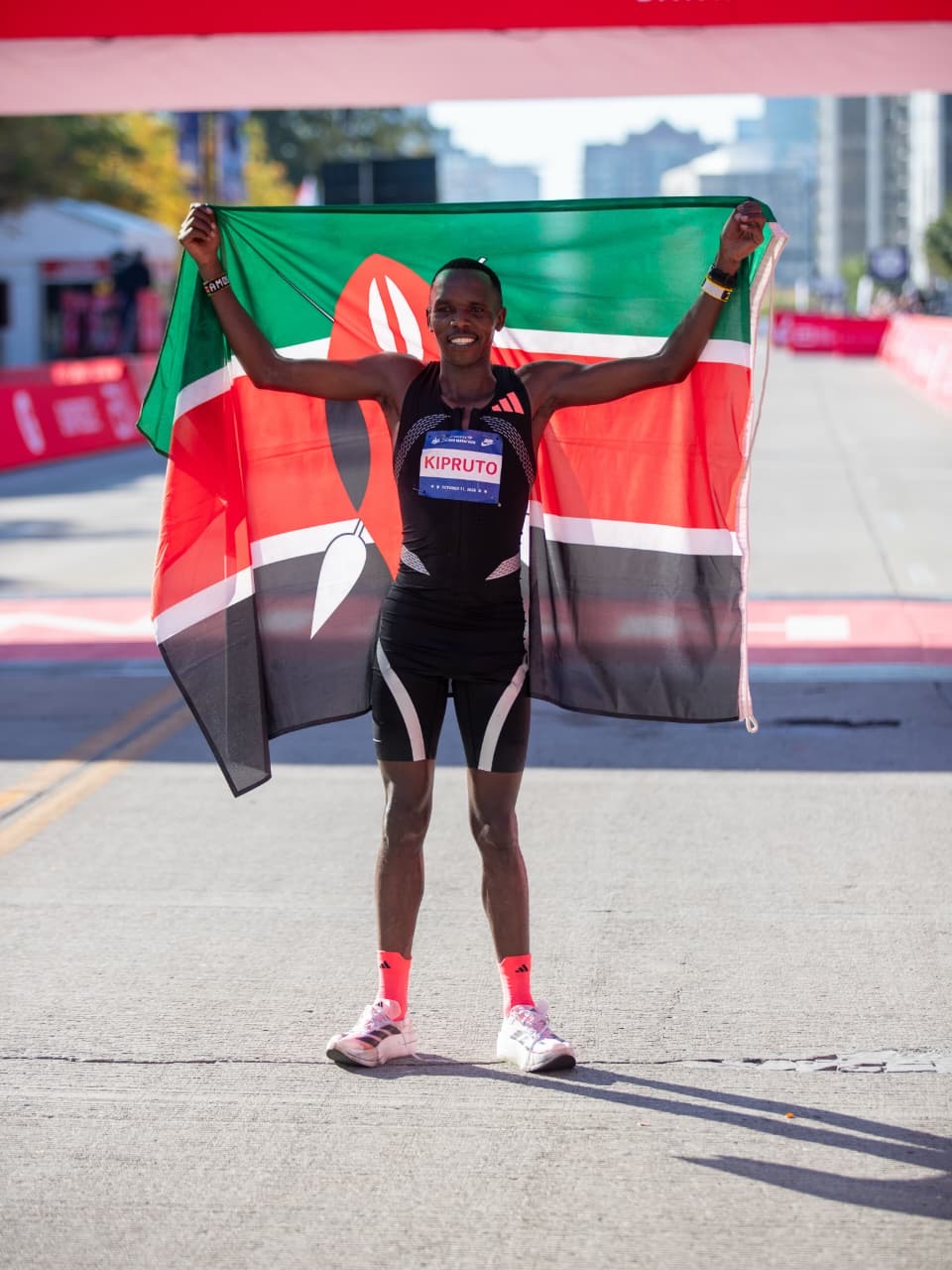
This is not a pace meant for comfort; it is a calculated assault that puts the leaders five seconds ahead of course-record tempo. Tucked tightly into their slipstream will be Jacob Kiplimo, the reigning king tracking a crown of immortality, and Amos Kipruto, a man who knows the exact cost of running on the razor's edge. The true test of this experiment will arrive at the 30-kilometre mark. When Ebenyo steps aside, the safety net vanishes. It will leave Kiplimo entirely exposed to the elements, forcing him to engage in a brutal, lonely 12-kilometre sprint against history.

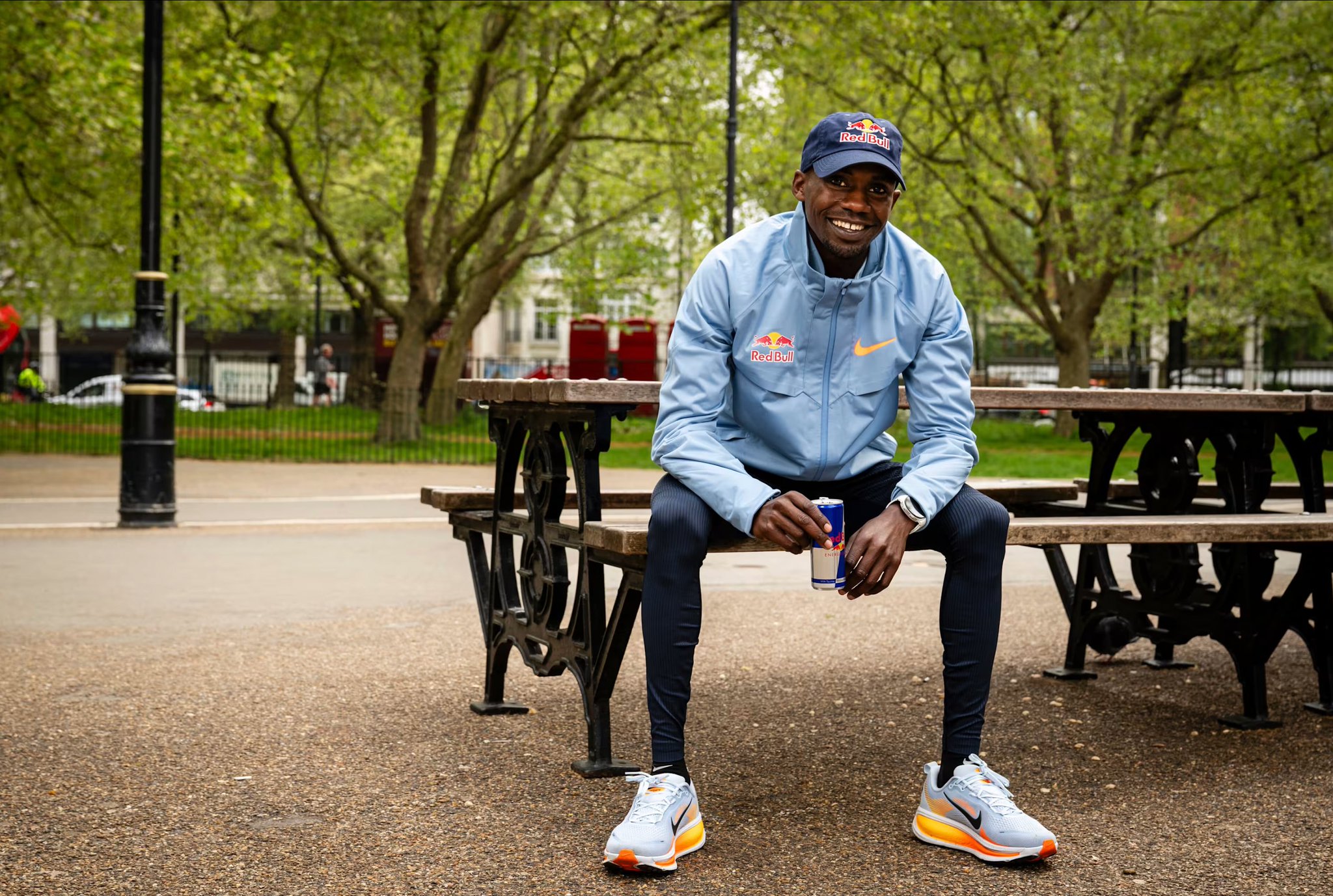
Jacob Kiplimo's fans in Uganda will stay glued to their televisions on Sunday afternoon. (Photo / Courtesy)
A minute and a half back, a secondary ecosystem will breathe with a different rhythm. Guided by Patrick Dever and Graydon Morris, the elite chase pack will pass the half in 61:30. Here, the formidable Ethiopian contingent - Mengesha, Takele, and Hiyrden - will bide their time alongside Kenya's Daniel Mateiko.
This group plays a predatory game, waiting for the front-runners to falter under the weight of the world-record pace while positioning themselves to capitalize if the absolute lead crumbles in the final miles.
Farther down the road, a deeply personal and gritty narrative unfolds around Clayton Young. Facing the daunting specter of a recent hamstring tear, Young’s hunt for the 2:04:43 American record will look drastically different from the aggressive front-running at the apex of the race.
His pacers - Boniface Kemboi, Evans Mayaka, and Abdela Godana - are uniquely tasked to run the entire 42-kilometre distance, offering a continuous, reliable lifeline. Swept along by a conservative 66:00 opening half, Young will play a high-stakes game of patience. It is an intentional tactical retreat, saving the explosive power of his compromised leg for a dramatic, second-half negative split.
Chicago has laid the tracks for something monumental. Whether today delivers a newly shattered global barrier or a masterclass in tactical survival, the streets are set for an unforgettable war of attrition.

Exact Projected Finish Times (Men's Race):
If the main pacer groups perfectly maintain their assigned splits through the finish line, here are the exact mathematically projected marathon completion times:
World Record Group (P1–P3): Crossing the 13.1-mile mark at 60:15 translates to an exact even-split finish time of 2:00:30. This would shatter Kelvin Kiptum’s world record by 5 seconds.
The Elite Chase Pack (P4–P5): Crossing the halfway point at 61:30 translates to an exact finish time of 2:03:00.
The Continental Field (P6–P8): Crossing the half at 62:20 yields a projected finish time of 2:04:40.
The American Record Group (P11–P13): Running an even split from a 66:00 half-marathon would result in a 2:12:00 finish. However, because Clayton Young is intentionally targeting a fast negative split, a finish near the 2:04:43 American Record means his second half must mathematically be a scorching 58:43—an incredibly steep tactical gamble.

Women’s Elite Race Tactical Analysis:
While the men track world-record ghosts, the elite women's field is setting up a highly aggressive, stratified battle of its own on the flat Chicago Marathon course.
1. The High-Stakes Lead Pack: Kosgei & Feysa (Targeting 65:30 Half):
Former world record holder Brigid Kosgei has requested a hyper-aggressive halfway split of 65:30.
The Math: A 65:30 opening half projects to a 2:11:00 flat marathon pace. This is a direct assault on the upper limits of women's distance running.
The Strategy: Reigning champion Hawi Feysa (2:14:57 PB) has indicated she will boldly match Kosgei's lightning pace. This creates a high-risk scenario. If the front-runners maintain this, they will finish dramatically ahead of their respective personal bests. However, it exposes them heavily to an absolute wall of fatigue over the final 10 kilometres.
2. The Patient Hunter: Sharon Lokedi’s Tactical Approach (Targeting 66:00–66:30 Half):
Making her highly anticipated debut on a historically flat course, Boston and New York champion Sharon Lokedi is deploying a starkly different, execution-first strategy.
The Strategy: Guided by her coach, Lokedi has opted for a more conservative half-marathon target between 66:00 and 66:30. This plots her for a controlled 2:12:00 to 2:13:00 execution—well inside her 2:17:22 personal best.
The Logic: Lokedi is a championship racer who thrives under pressure on difficult, undulating courses like Boston. By letting Kosgei and Feysa exhaust themselves out front, Lokedi will lean on her trademark patience. She aims to cross the half with enough energy left to pick up the tempo, hunting down fading runners over the second half of the race.
Verdict: The women's race will likely look like a rubber band. Kosgei and Feysa will stretch the field to its absolute limit early, while a poised Sharon Lokedi anchors the chase pack, banking on a controlled, masterfully paced second half to reel them in on Columbus Drive. (Agency reports)